
Invisible Stress in Your Environment

There is a growing awareness that wellbeing is not only shaped by what we do—but also by the environments we spend our lives inside.
Burnout is often treated as a psychological or behavioural issue. But in many cases, it is spatial.
There are environments that continuously extract energy from you without you noticing. Not through obvious chaos—but through subtle, constant stimulation. Examples:
visual clutter your brain keeps processing,
artificial lighting that disrupts circadian rhythm,
lack of spatial separation between work and rest,
materials that feel cold, harsh, or overstimulating
These are not design flaws. They are nervous system stressors.
At ANIMA, we call this environmental leakage: when your space quietly drains your cognitive and emotional capacity. And the difficult truth is this: You cannot fully recover in a space that is constantly depleting you.
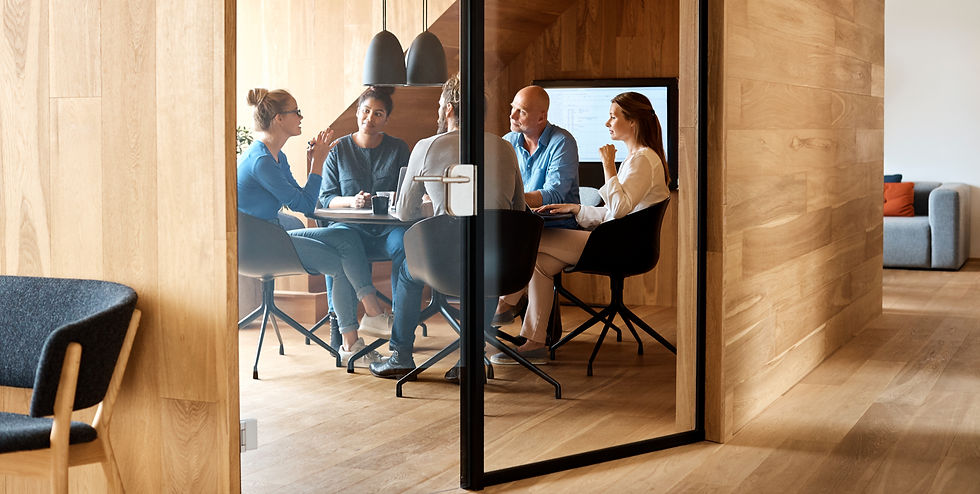
The spaces we inhabit have the ability to support clarity, calm, focus, and restoration in subtle yet profound ways:
Natural light can help regulate our rhythms.
Thoughtful spatial flow can create mental ease.
Materials, textures, and sensory balance can influence how grounded and supported we feel throughout the day.
Tune-in energy provides a balanced environment for our nervous system.At ANIMA, we believe environments can become active contributors to human wellbeing.
Not simply spaces we move through, but spaces that help us think more clearly, feel more connected, and recover more deeply.
When environments are designed with human experience in mind, they can quietly support the way we live, work, heal, and relate to others.
The future of design is not only aesthetic.
It is restorative, conscious, and deeply human.


Comments